

Landscape Lighting
LED Conversion
Beautifying Homes Throughout
CaPE CORAL, FLORIDA since 2010
Lighten Your Load! Upgrading your Outdoor Lighting System from Halogen to LED
Over the past few years, there have been significant advancements in outdoor low voltage lighting technology. The more efficient LED landscape lighting alternative has emerged as the preferred choice, offering numerous benefits over the outdated halogen bulbs.
Converting your outdoor lighting system from halogen lamps to LED lamps offers numerous benefits, whether you are looking to reduce energy costs, expand your lighting setup, or minimize routine maintenance.
- Energy savings: LED lamps are up to 90% more energy-efficient than halogen lamps, which can lead to significant savings on your energy bills.
- Extended lifespan: LED lamps last for up to 50,000 hours, which is much longer than halogen lamps (which typically last for 2,000-3,000 hours). This means you will need to replace LED lamps much less often, saving you time and money.
- Wide range of options: LED lamps are available in a wide variety of styles, colors, and brightness levels, so you can easily find the perfect lamps to match your outdoor lighting needs.
- Easy installation: LED lamps can be easily installed in existing halogen fixtures, making it a quick and easy way to upgrade your outdoor lighting system.
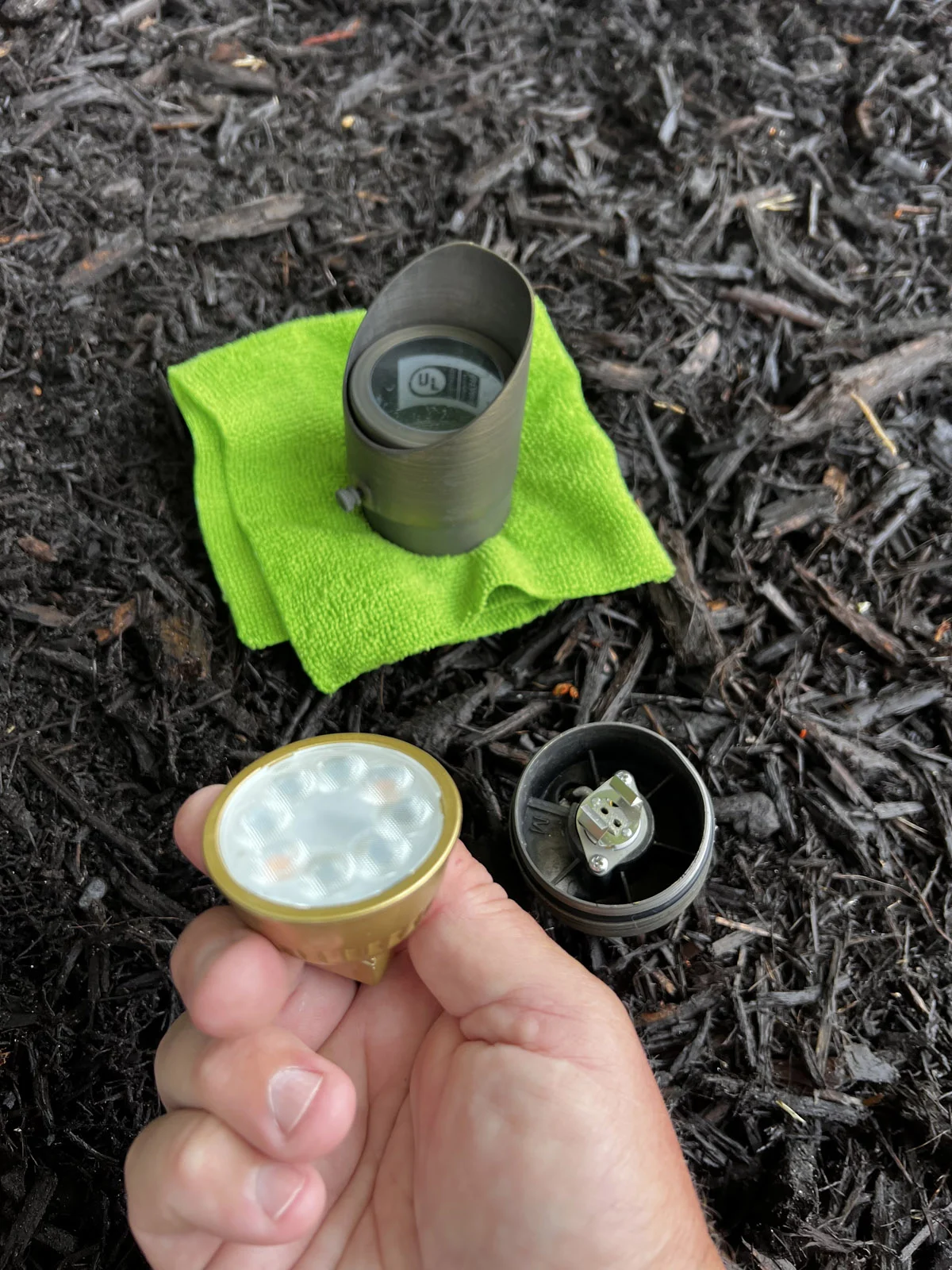
Save Money with LED
LED lamps have an incredible impact on reducing your energy bill. Compared to traditional halogen lamps, they consume about 80-90% less electricity. LED lamps achieve this energy efficiency by reducing the overall electrical load on your outdoor system. Converting to LED can significantly lower your monthly electrical bill, often reaching a discount of as low as $3.00-$5.00 per fixture in most cases. By switching to LED, you can conserve energy and also enjoy optimal lighting conditions.
Cut Down on Lamp Replacement and Maintenance
Switching to LED lamps also reduces the cost and frequency of lamp replacements and routine maintenance. In a halogen system, lamps typically need replacement every year or so, incurring additional expenses on both parts and labor. In contrast, LED lamps have a much longer lifespan. Most reputable LED lamps on the market today are designed to last at least 10 years, often backed by a 5-year replacement warranty. While LED lamps may have a higher upfront cost, they prove to be cost-effective by eliminating the need for frequent lamp replacements.
While switching to LED lamps can significantly reduce the need for maintenance, it is still important to service your system regularly to ensure optimal operating condition.
Expand Your Lighting System
Converting your lighting system from halogen to LED lamps not only reduces energy usage but also frees up electrical capacity, allowing for the addition of more lights. Every lighting system has a fixed wattage limit determined by the size of transformer used. For example, a 300-watt transformer can typically support up to 260 watts to prevent overloading and tripping. In a halogen system, each lamp consumes between 20 to 35 watts. With a maximum capacity of 260 watts, a halogen system can only accommodate 8 to 13 lamps per fixture without overloading.
However, by using 4-watt LED lamps instead of 20-watt halogen lamps, the electrical load on the system decreases significantly. This increased efficiency enables the system to support a much larger number of LED lamps and fixtures. In this example, if we take the same 300-watt transformer and use LED lamps instead, the system can potentially handle up to 65 lamps when properly designed. By retrofitting your existing halogen system with LED lamps, you reduce electricity consumption and create room for additional fixtures without the need for a larger transformer.
When considering adding more lights to your LED retrofitted system, it is crucial to consider factors such as the length of the wires, potential voltage drops, and the balance of the electrical current. Each system is uniquely engineered and requires a tailored approach. Consulting with a lighting specialist about LED lights and other lighting solutions is always recommended.
LED bulbs prioritize safety as well. They emit clean, bright light with a pleasing warm white glow, without generating excessive heat like halogen bulbs. This feature makes LED lighting a safe option around combustible materials such as wood and mulch.
Now that we’ve explained the benefits of LED lamps over halogen lamps, it is important to understand how to select the right LED bulbs for your landscape lighting application. The three key specifications to consider are Kelvin temperature, lumen output, and beam spread.
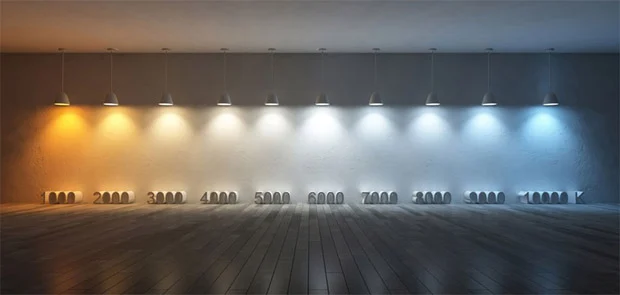

Kelvin Temperature (Color)
The Kelvin measurement indicates the “temperature” or COLOR of the light. Landscape lighting usually falls somewhere between 2700K and 3000K. 2700K lamps will produce a warmer (more yellow) light in comparison to the bright white light of 3000K lamps. If lamps are replaced with a different color temperature, this will create a mismatch between the color of the new and old lamps.
Lumen Output (Brightness)
A lumen is a unit of measurement for luminous flux or the perceived power of a light (BRIGHTNESS). The number of lumens needed for landscape lighting will depend on the location and intended use of the light. For example, if a light is replaced on one column with a lamp that has more lumens than the other existing lights, that column will shine brighter than the rest. Keep in mind, choosing the same lumen output as existing lights may still cause one column to shine brighter simply because LEDs can fade over time (especially low-quality LEDs).
Beam Spread/Angle
Beam spread or beam angle measures the spread of light (width of the beam) from a light source. As light moves away from the light source, it spreads out and becomes less intense. Consider the width of the object or focal point that is being lit with your existing lights. If a column light is replaced with a light that has a wider beam angle than the rest, the light may not reach the top of the column. This will cause inconsistency from one column to the next.
LED landscape lighting technology has brought a revolution in outdoor lighting systems, offering numerous advantages. With its remarkable efficiency, enhanced safety features, extended bulb lifespan, and potential for cost savings, LED has become the preferred choice for those seeking optimal illumination while minimizing energy consumption.
Transitioning from a halogen-based landscape lighting system to LED can be a relatively straightforward process, depending on the age of your existing fixtures. Some fixtures can be easily retrofitted to accommodate LED bulbs, while older fixtures may require upgrading to ensure they are waterproof and to prevent any potential issues. Get Lit Landscape Lighting can provide you a complimentary LED conversion assessment. Our experienced designers will evaluate your current lighting system and work together with you to create a comprehensive conversion plan. Whether you decide to convert all at once or gradually in stages, you can expect significant improvements in both operational costs and the quality of light once the LED conversion is complete.
YOU HAVE QUESTIONS,
WE HAVE ANSWERS
Can I convert my existing halogen system to LED without changing all
my fixtures?
Yes! In most cases, if your existing landscape lighting fixtures are structurally sound and free from major corrosion, Get Lit can perform a drop-in LED retrofit. This involves removing the old heat-generating halogen lamps, cleaning out the sockets, and installing commercial-grade, low-voltage LED replacement bulbs into your current housings. This option gives you all the energy savings and brightness of a modern LED system at a fraction of the cost of a full systemic replacement.
How much money will I actually save on my Cape Coral electric bill
with an LED conversion?
Homeowners typically see a 75% to 85% drop in energy consumption for their outdoor lighting after a conversion. Traditional halogen bulbs consume a massive amount of power—a typical yard setup might draw 300 to 500 watts of electricity every single hour it’s running. Modern LED bulbs achieve the same or better brightness using only 3 to 5 watts per fixture. In Southwest Florida, where outdoor lights often run 10 to 12 hours a night year-round, those monthly utility savings add up rapidly, allowing the conversion to pay for itself over time.
Will an LED conversion fix the problem of my furthest backyard lights
looking dim or yellow?
Yes, this is a very common issue known as voltage drop, and an LED conversion fixes it beautifully. Halogen systems require high, exact voltage to stay bright; as power travels down long wiring runs to the edge of your property or canal dock, it weakens, causing the furthest lights to look weak and yellow. Because LEDs operate on a incredibly wide voltage window and pull very little power, they draw minimal current through the lines. Converting to LED instantly stabilizes your system, ensuring your furthest palm uplights look just as crisp, bright, and uniform as the ones closest to the transformer.
What color temperatures are available for an outdoor LED
conversion? Will it look too cold or blue?
Not at all. Many homeowners remember the harsh, blue-white glare of early, cheap LED technology, but modern commercial LED options are incredibly warm and natural. For Southwest Florida residences, Get Lit specializes in a warm white output (2700K to 3000K). This perfectly mimics the inviting tone of high-end halogen lighting, beautifully accentuating the green hues of your tropical landscaping and the warm tones of your home’s stucco facade without ever feeling sterile or clinical.
Have More Questions?
Send Us A Message.
"*" indicates required fields
schedule your consultation
Get Lit Landscape Lighting offers LED Landscape Lighting Conversion services in Fort Myers, Cape Coral, Port Charlotte, Punta Gorda, Lehigh Acres, Estero, Bonita Springs, and Naples, Florida.